Markets climb despite Middle East conflict
Rising energy costs are weighing on major economies, even as stock markets continue to reach new highs.
Risk appetite remains strong
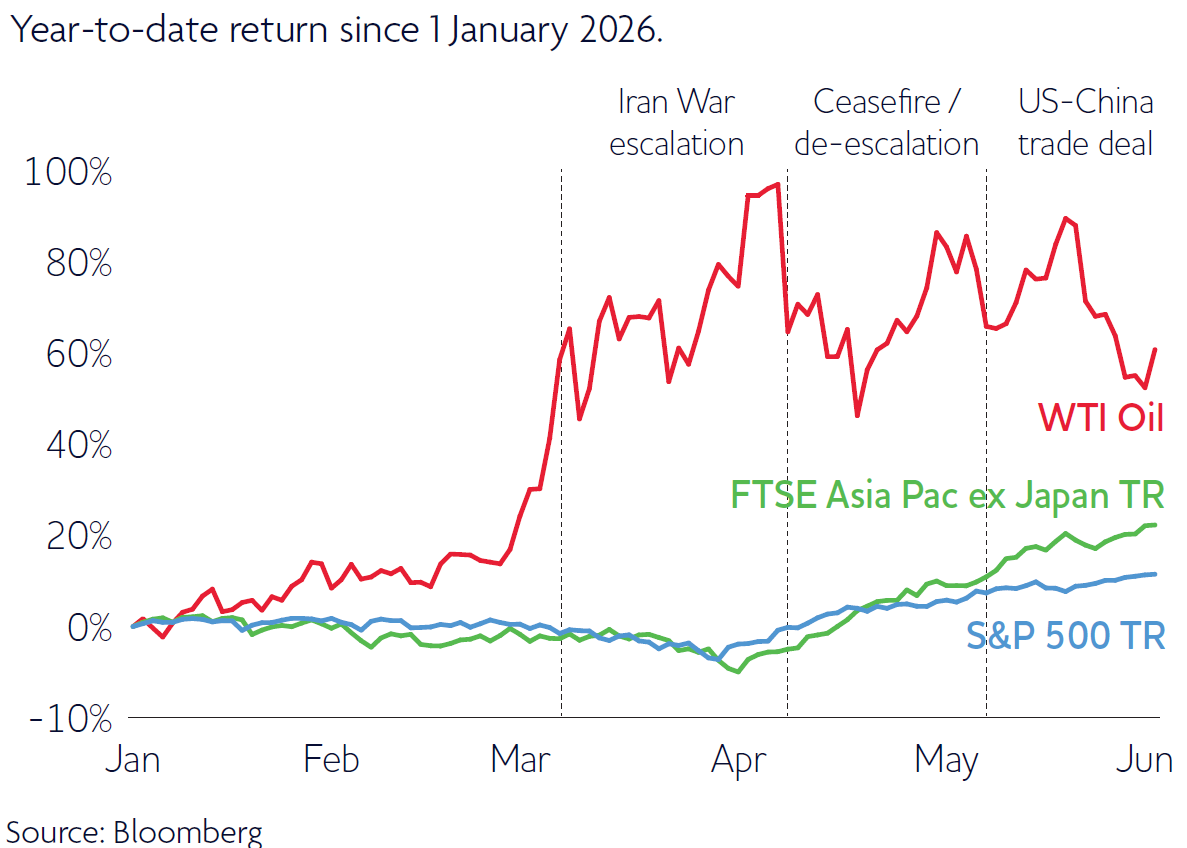
US stocks climbed to record highs in May despite uncertainty caused by the US-Iran war and elevated oil prices. Global bond yields also rose on concerns that higher energy costs could force central banks to keep interest rates higher for longer, before easing towards month end.
Equities were supported by optimism surrounding a potential peace deal with Iran and growing confidence that artificial intelligence spending will continue to boost corporate earnings. US companies delivered a strong first-quarter earnings season, broadly beating expectations. European and Asian stocks also rallied, buoyed by hopes of peace in the Middle East and continued AI enthusiasm.
However, the broader economic picture is becoming more challenging. The impact of the Iran conflict is beginning to hit the US economy, pushing petrol and diesel prices higher and increasing costs for businesses. US inflation rose to 3.8% in April, its highest level in three years and up half a percentage point from March. This makes a Federal Reserve interest rate cut this year increasingly unlikely.
The effects of the energy shock have yet to feed through to the labour market. US employers added 115,000 jobs in April, while unemployment remained at 4.3%. Consumer confidence fell to a fresh record low in May amid concerns about higher fuel prices, while inflation expectations also increased.
Energy costs begin to bite
UK inflation fell in April, but economists warned price pressures could rise again later in the year. Inflation dropped to 2.8%, down from 3.3% in March, largely due to the government’s cap on household energy bills.
The Iran war is starting to take its toll. Retail sales fell by 1.3% as consumers cut spending amid rising energy and fuel costs. Unemployment rose unexpectedly to 5%, while job vacancies fell to their lowest level in five years. There was some positive news after figures showed the UK economy grew by 0.3% in March and 0.6% in the first quarter. Business activity also increased, supported by growth in manufacturing and services.
Pressure builds on China
The fallout from the Iran war is increasing pressure on Chinese manufacturers already grappling with weak demand. Producer prices rose at their fastest pace in more than three years in April, while consumer inflation also accelerated as energy costs increased.
China’s export growth rebounded in April as factories stockpiled components amid concerns that the conflict could drive costs higher. While China has so far weathered the fallout, economists believe a prolonged conflict and higher energy prices could weaken demand.
Meanwhile, eurozone economic activity contracted at its fastest rate in more than two years as rising costs put pressure on businesses and households. The services sector posted its weakest performance since 2021, while manufacturing output also lost momentum.
Energy price increases pushed eurozone inflation to 3% in April, well above the European Central Bank's (ECB) 2% target. This leaves the ECB facing the difficult task of tackling inflation without worsening the economic slowdown. As a net importer of energy, the region remains particularly exposed to higher energy prices.
Figure 1. Investors shrug off energy shock
Download Omnis Market Update (.pdf)
