Europe and Japan lead market gains
Relief over a US–Iran peace framework agreement lifted European, UK and Japanese equities, while falling oil prices eased concerns about inflation and interest rates.
Investor confidence returns
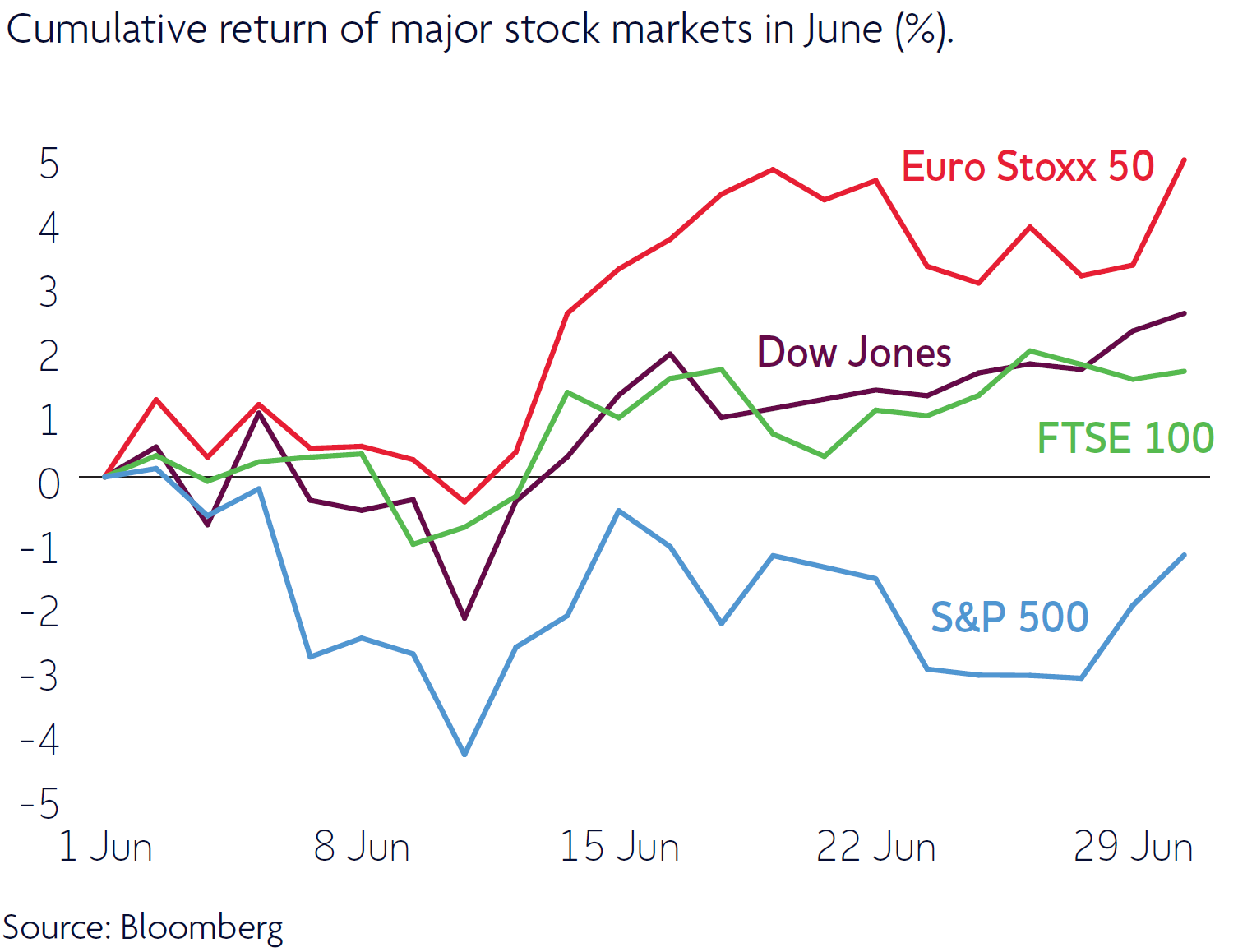
European, UK and Japanese equities rose sharply after the US and Iran agreed a framework deal to end the war. European stocks climbed to record highs, while the FTSE 100 reached a two-month high as investors welcomed the breakthrough. US markets were more mixed, with investors rotating away from technology stocks into small caps, industrials, healthcare and financials. This helped the broader Dow Jones Industrial Average outperform the technology-heavy Nasdaq and S&P 500 indices.
The Nasdaq index fell by as much as 7% from its record high before recovering much of the decline as investors refocused on the beneficiaries of AI investment. Government bonds also rallied as investors scaled back expectations for further interest rate rises, signalling growing confidence that a prolonged period of higher inflation may be avoided.
The biggest market debut in history also captured investors’ attention. SpaceX shares finished the month up 27% despite sharp early volatility, underlining continued enthusiasm for AI and technology related investment opportunities.
The US Federal Reserve (Fed) held interest rates at 3.50% to 3.75% for a fourth consecutive meeting but signalled a possible rate hike later this year. US inflation rose to a three-year high of 4.2% in May, while the labour market remained resilient, with employers adding 172,000 jobs and unemployment holding steady at 4.3%.
Political uncertainty fails to unsettle markets
Keir Starmer announced his resignation as Prime Minister, paving the way for Andy Burnham to take over at No. 10. UK equities were largely unfazed, while the pound and government borrowing costs steadied.
The Bank of England left interest rates unchanged at 3.75% after inflation remained at 2.8% in May. Despite concerns that the Iran war would push inflation higher, the Bank lowered its inflation forecast, expecting it to rise to just over 3.25% later this year. Consumer spending rebounded in May and there are signs that confidence is improving, although pressures remain.
The UK's labour market remains relatively stable. Unemployment edged down to 4.9% in the three months to April, although job vacancies fell to a five-year low of 707,000.
Europe grapples with weaker growth
The European Central Bank (ECB) raised interest rates for the first time since 2023 in response to higher inflation, increasing its main deposit rate from 2% to 2.25%. Markets expect two further rate increases by next spring.
Eurozone inflation rose to 3.2% in May from 3% the previous month, raising concerns that manufacturers may need to pass higher costs on to consumers. The economy unexpectedly contracted by 0.2% in the first quarter, weighed down by weaker output in Ireland and France.
China's economy also showed signs of slowing after a strong start to the year. Retail sales fell 0.6% in May, the first decline in more than three years, while fixed asset investment dropped 4.1% in the first five months of the year. Industrial output growth also slowed, while domestic demand and the property market remained weak despite continued strength in exports.
Figure 1: Investors favour broader markets
Download Omnis Market Update (.pdf)
