Markets rebound after Trump's Greenland U-turn
Despite geopolitical turbulence, it was a positive month for markets.
A positive start to the year.
Global markets rebounded after President Donald Trump said a framework on a future deal for Greenland had been reached. He said he would no longer impose tariffs on some European countries and ruled out taking Greenland by force, helping to calm investor nerves after renewed trade-war risks had caused European stocks to slip and US Treasury yields to spike.
Equity markets were largely unperturbed by the capture of Venezuelan President Nicolás Maduro and rising tensions in Iran. Ten-year UK government bond yields fell to their lowest level since December 2024, meaning prices rose.
Trump nominated Kevin Warsh as the US Federal Reserve’s (Fed) next chair, with Jerome Powell’s term ending in May. The announcement reduced policy uncertainty and triggered a sharp pullback in gold, silver and other precious metals, which had previously benefited from safe-haven demand. The Fed held interest rates steady at 3.5% to 3.75% following three straight quarter-point reductions. Powell said the central bank was in no rush to cut rates further, despite growing pressure from Trump. Federal prosecutors also opened a criminal investigation into Powell over testimony on renovation costs at the Fed’s Washington DC headquarters.
US inflation remained at 2.7% in December as Trump faced mounting pressure over the cost-of-living crisis. Analysts believe inflation will continue to decline towards the Fed’s 2% target throughout 2026. US job creation slowed to its weakest pace since the Covid pandemic, with just 50,000 jobs added in December.
FTSE hits new record.
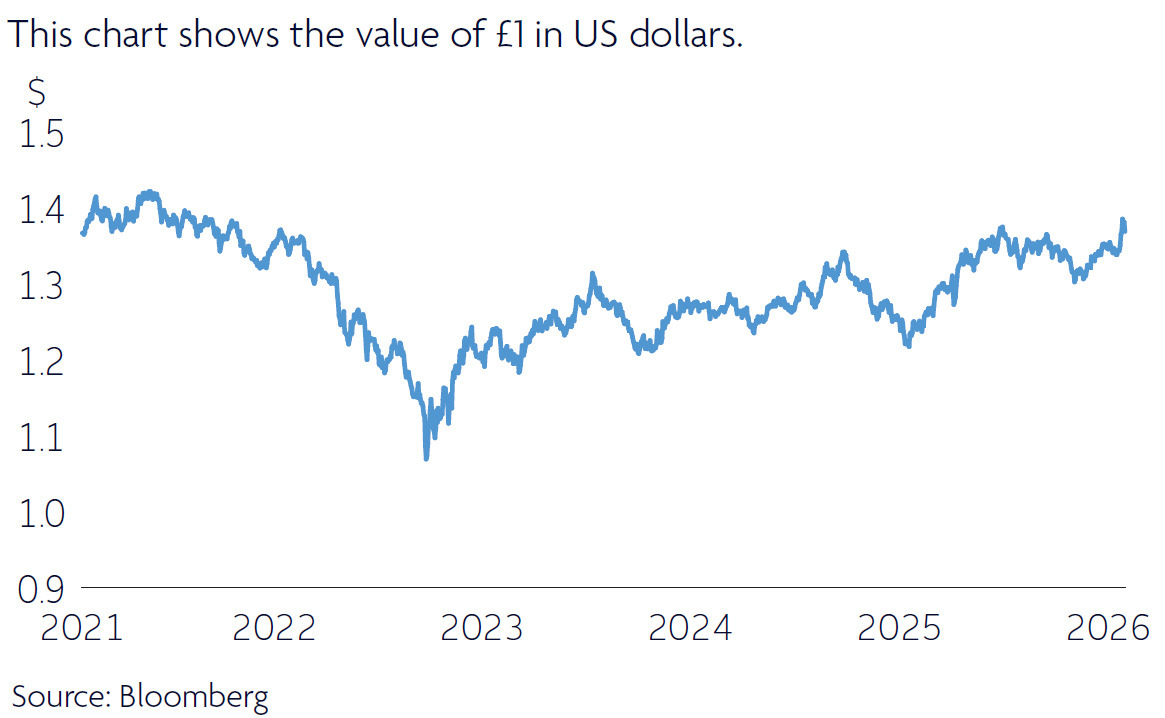
The FTSE 100 climbed above 10,000 points for the first time, buoyed by upbeat economic data and strong company earnings. The pound also rose to a four-year high against the dollar. Meanwhile, the UK economy grew by 0.3% in November, its fastest pace since June, supported by a rebound in manufacturing and services. Inflation rose for the first time in five months, climbing to 3.4% in December. Analysts have largely ruled out an interest rate cut by the Bank of England in February.
There were signs of weakness in the labour market, with unemployment near a five-year high at 5.1% in the three months to November, while wage growth continued to ease. Payrolls fell by 43,000 in December.
Japan bond yields rise.
Japanese bond yields rose after Prime Minister Sanae Takaichi called a snap election and pledged food tax cuts. The yen rebounded from an 18-month low against the dollar after authorities signalled readiness to support the currency.
China reported a record $1 trillion trade surplus for 2025 despite tariff pressures. While trade with the US weakened, this was offset by stronger exports elsewhere. Fourth-quarter growth slowed to its weakest pace in nearly three years as domestic demand softened, even though GDP met its 5% annual target.
Inflation accelerated in December after spending picked up ahead of the New Year holiday. Industrial output rose 5.2% in December, while domestic consumption weakened.
The eurozone enters 2026 with cautious optimism. Inflation fell to 1.9% in December, below the European Central Bank’s (ECB) target, while private-sector activity continued to expand and business confidence rose to a 20-month high. Germany returned to modest growth in 2025 as stronger domestic demand offset the impact of US tariffs.
Figure 1: Sterling strengthens against the dollar